
A car keychain with belt clip moves a vehicle key out of a crowded pocket and gives it a consistent attachment point. That can be useful for drivers who carry a large key fob, wear work clothes with limited pocket space, move between several vehicles, or want to detach one key without removing an entire ring. It can also be the wrong format if the keys swing against the car, catch on equipment, or are clipped where they are easy for another person to reach.
The right question is not simply, “Does it clip?” It is, “Does it clip securely in the place I actually intend to use?” CarGearDirect's zinc alloy car keychain and quick-release belt hook is designed around that carry style. The listing describes belt-loop or bag attachment, a detachable hook, a metal body, and three metallic finishes. Check the current page for available options and inspect the delivered mechanism before trusting it with a vehicle key.
Who Benefits Most From a Belt Clip?
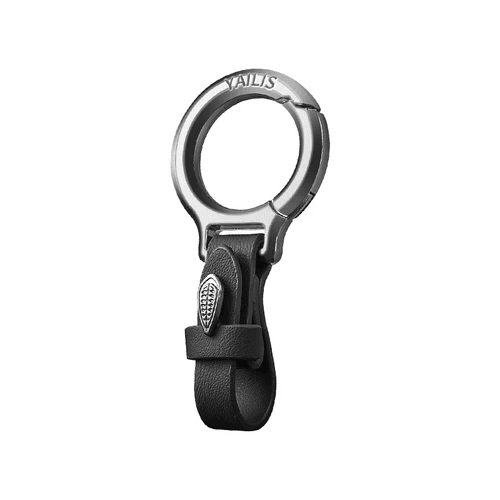
Belt-clip carry works best when it replaces an inconvenient routine with a predictable one. A delivery driver may want the vehicle key available without digging into a pocket at every stop. A commuter may want to keep a bulky fob away from a phone screen. Someone wearing gloves may prefer a larger attachment point, while a household sharing a car may appreciate being able to detach only the vehicle key.
It is less suitable around rotating machinery, open flames, climbing equipment, patient-care environments, or any workplace where hanging objects are prohibited. It may also be uncomfortable in a low sports seat or under a tightly fitted jacket. Follow workplace rules and choose a bag loop or enclosed pouch when exposed keys could snag.
Choose the Attachment Point Before the Product
Look at the belt loops, belt, or bag you use most often. Measure the thickness visually and notice how the attachment point moves when you sit. The clip must open far enough without being forced, close completely, and hang in a direction that keeps the keys under control.
- Front belt loop: Easy to see, but the keys may contact the steering wheel area or center console when seated.
- Side belt loop: Convenient for standing access, though it may press against a bolstered seat.
- Rear belt loop: Keeps keys out of the way while standing, but they are harder to monitor and may be uncomfortable when sitting.
- Interior bag loop: More discreet and protected, provided the loop is reinforced and easy to reach.
- Exterior bag strap: Fast access, but greater exposure to snagging, weather, and opportunistic loss.
Test the location while seated in the parked vehicle. Buckle the seat belt and move through the normal range needed to enter, exit, and reach controls. The keys should not become trapped under the belt, touch a pedal, interfere with a control, or scrape an interior surface. If they do, change the attachment point.
Control Swing, Noise, and Surface Contact
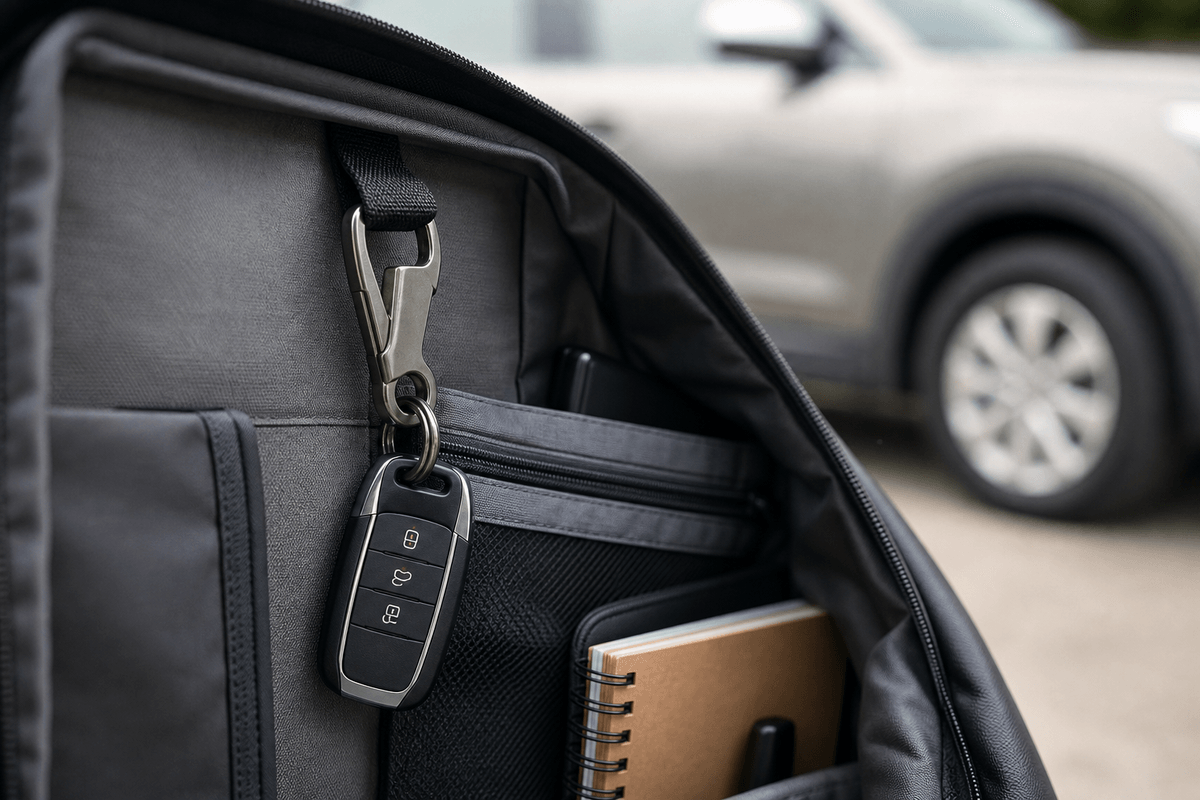
A belt clip keeps keys out of the pocket but allows them to move. The longer and heavier the bundle, the more it swings. Start by removing keys that do not belong to the trip. Keep the vehicle fob on the detachable section and move house, mailbox, storage, and decorative items to a second ring when practical.
A short connector reduces movement. A soft sleeve can reduce noise, but it must not cover a release button or prevent visual confirmation that the connector is closed. Avoid makeshift cords that can wrap around controls. If a rigid metal fob or key repeatedly touches painted bodywork, move the carrier before chips or scratches develop.
Drivers comparing other ways to organize the cabin can browse CarGearDirect's interior accessory collection and full product selection. A belt-clip keychain should remain on the person or a secure bag point; it is not a substitute for an in-car organizer.
Use the Quick Release With Intention
A detachable connector is most valuable when another person needs one key. At a service counter, detach the vehicle key and retain house or office keys. For a shared car, transfer only the fob required for that vehicle. Before the key changes hands, remove personal tags that display an address or unnecessary account information.
When reconnecting, align the parts, close them fully, and pull gently over a safe surface. Do not assume that a partial insertion is locked. If the mechanism becomes gritty or the closure no longer feels distinct, stop using it until it is cleaned according to the product instructions or replaced.
Keep Electronic Keys Uncrowded
A belt clip can carry many objects, but an electronic vehicle key should not automatically share space with everything else. Ford owner information for some coded-key systems warns that a second coded key, metallic objects, or electronic devices close to the programmed key can contribute to starting problems. If that happens, the manufacturer advises moving the objects away and following the owner manual.
NHTSA also notes that keyless-ignition systems differ among vehicles. Learn the alerts and shut-down procedure for the actual model, confirm the vehicle is in Park, switch the engine or propulsion system off, apply the parking brake, and take the fob with you. A belt clip can make the last step easier, but it cannot replace the correct operating sequence.
Security Comes From Habit, Not Visibility
A visible keychain may help you notice the key, but it can also advertise that you are carrying it. In a crowd, move the carrier inside a bag or jacket. Never clip the key to a bag you plan to leave unattended. NHTSA's vehicle-theft guidance advises drivers to take the key, lock doors and windows, park in well-lit areas when possible, and never leave the vehicle running unattended.
Build a simple arrival routine: switch the vehicle off, confirm the key or fob is in hand, exit, close all openings, lock the vehicle, and attach the keychain before walking away. At home, place the entire carrier in one consistent location away from the vehicle rather than leaving it in the garage or cup holder.
A Practical First-Week Test
- Day one: test the clip and release over a table at least 20 times.
- Day two: wear it during a short walk and check for unwanted opening or sharp edges.
- Day three: sit in the parked vehicle and confirm clearance from the belt and controls.
- Days four through six: use the normal routine while keeping the key load minimal.
- Day seven: inspect the gate, ring, finish, spring, and quick-release connection.
If the clip remains comfortable and the mechanism closes consistently, it is likely a good fit for the routine. If it snags, swings against surfaces, or encourages an oversized key bundle, try a secure interior bag loop or another format. You can compare current formats through the best-sellers page, browse new arrivals, or return to the CarGearDirect home page.
A car keychain with a belt clip is most successful when it creates a repeatable place for a light, purposeful key set. Select the location first, test the closure, keep the keys clear of the vehicle and controls, and move the carrier out of sight when the situation calls for discretion.