
A quick release car keychain solves a small problem that drivers repeat several times a day: keeping a vehicle key secure while still being able to detach it without wrestling with a tight split ring. The idea is simple, but the details matter. A good setup should make the correct key easy to reach, reduce pocket clutter, and let you separate the car key from house, office, or storage keys when you need to hand one key to a valet, mechanic, or family member.
Quick release does not mean “release accidentally.” The useful version combines deliberate operation with a secure closed position. Before choosing one, look beyond the finish and consider how the mechanism feels, where it will be carried, and what will hang from it. CarGearDirect's zinc alloy quick-release keychain and belt hook is one example of this carry format. Its listing describes a metal body, a quick-release hook, belt-loop or bag attachment, and three metallic finishes; confirm current options on the live page before ordering.
What a Quick-Release Keychain Actually Changes
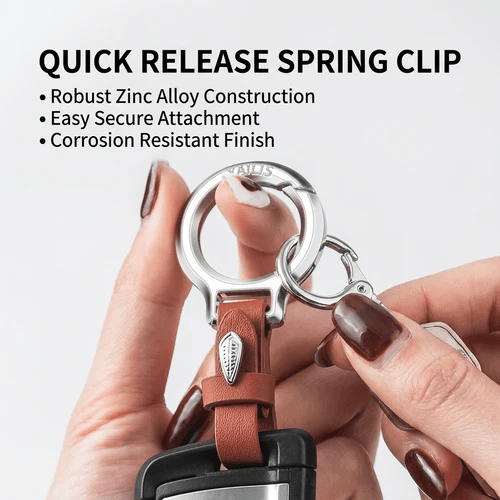
A normal ring keeps everything together. That is dependable, but inconvenient when one key needs to leave the group. A quick-release design divides the system into two parts: a main carrier that stays on your belt loop, bag, or primary key set, and a detachable section that holds the vehicle key or fob. The mechanism may use a button, sliding collar, spring-loaded catch, or another positive action.
The benefit is workflow, not speed for its own sake. You can detach the vehicle key before entering a service appointment, remove a bulky fob when going for a run, or keep a shared car key separate from personal keys. If you are comparing this with other interior and everyday-carry accessories, ask whether the item removes a real point of friction rather than simply adding another object.
Five Checks Before You Trust the Mechanism
A product photo cannot show how a latch behaves after hundreds of uses. Inspect the physical item when it arrives and repeat the check periodically. Focus on these five points:
- Deliberate release: The release should require a clear action and should not open when brushed against clothing.
- Positive closure: Listen or feel for a complete click, stop, or seated position instead of assuming the parts are joined.
- Minimal play: A little movement may be normal, but the connection should not feel as if it can pull apart at an angle.
- Protected control: A recessed or well-positioned button is less likely to be pressed by other objects in a crowded bag.
- Sound key ring: The detachable ring and every small connector are as important as the main hook. Replace any part that is bent or spreading.
Test over a table or carpet, not over a drain or busy sidewalk. Attach the normal key load, close the connector, tug in several directions, and operate it repeatedly. This is a practical inspection, not proof of a rated load. Do not use a car keychain for climbing, towing, lifting, pet restraint, or any safety-critical task.
Build a Lighter, Smarter Key Set
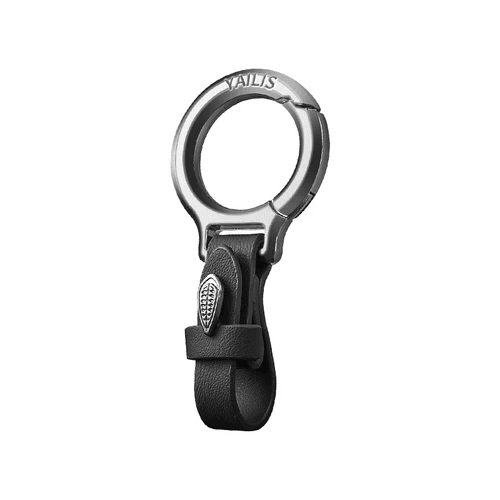
The best quick-release arrangement usually places the car key or fob on its own detachable section. Keep duplicate keys, decorative pieces, mini tools, and rarely used keys elsewhere. This improves identification and reduces the number of metal objects surrounding an electronic fob.
That separation can matter with some coded keys. Ford owner information notes that metallic objects, electronic devices, or a second coded key on the same chain can sometimes interfere when they sit too close to the key during starting. The correct guidance depends on the vehicle, so check its owner's manual. NHTSA likewise explains that keyless-ignition systems and their alerts vary by model. A keychain should support the way your own vehicle operates, not override its instructions.
For a broader look at practical add-ons, browse the store's car accessory collection or the protection and gadgets category. Keep each purchase tied to a defined job: carry, organization, visibility, charging, or protection.
Where to Clip It
A belt loop is convenient because the key stays outside the pocket, but position matters. Choose a loop that keeps the keys away from the seat-belt buckle, door opening, and painted bodywork. Before closing the door, check that nothing is hanging outside. If the keys strike the center console or seat frame while driving, move them to a softer pouch or a bag attachment point.
A bag loop can be more discreet, especially for commuters, but do not use a loose exterior strap where the keys can snag. The attachment should be structurally sound and easy for you to see before walking away. Wherever you clip it, NHTSA's theft-prevention guidance is straightforward: take the vehicle key with you and do not leave it in or on the vehicle. A convenient carrier should reinforce that habit.
A 30-Second Daily Routine
- Attach the detachable section and confirm the mechanism is fully closed.
- Check that the car key or fob is present before leaving home or work.
- Clip the carrier to the same secure location each day.
- Before driving, make sure hanging keys cannot interfere with controls or distract you.
- After parking, remove the key, lock the vehicle, and take the carrier with you.
Consistency is the real advantage. A predictable home for the keys reduces searching and makes it easier to notice when something is missing. If you are still deciding what format suits you, the best-sellers category can provide context, while new arrivals shows the latest store selection. Popularity is useful evidence of interest, but it is not a substitute for checking the mechanism yourself.
Care Without Overcomplicating It
Wipe away dust, grit, moisture, and pocket lint with a soft dry cloth. Avoid soaking the mechanism or applying oil unless the seller specifically recommends a lubricant; excess oil can attract dirt. Inspect the spring, button, connector, and ring whenever the action starts to feel sticky, unusually loose, or incomplete. Retire the carrier if it has a crack, a badly worn gate, or a release that no longer closes positively.
A quick-release keychain earns its place by making a repeated action simpler while keeping the vehicle key accounted for. Choose a mechanism that closes decisively, carry only what you need, follow the vehicle manual, and use the same clip location every day. For more ideas, visit CarGearDirect and compare the live details before making a final choice.